

What are the common problems with a stretch film line and how to solve them?
Dec 26, 2025
Leave a message
As a seasoned supplier of stretch film lines, I've witnessed firsthand the various challenges that operators often face. In this blog, I'll delve into the common problems encountered with stretch film lines and provide practical solutions to address them.
1. Uneven Film Thickness
One of the most prevalent issues in stretch film production is uneven film thickness. This problem can lead to inconsistent product quality, reduced performance, and increased waste.
Causes:
- Extruder Issues: Improper screw design, wear and tear of the screw and barrel, or inconsistent melt flow can result in uneven distribution of the molten polymer across the die.
- Die Problems: A dirty or damaged die, incorrect die gap settings, or uneven temperature distribution within the die can cause variations in film thickness.
- Cooling Roll Problems: Uneven cooling of the film on the cooling rolls can lead to differential shrinkage, resulting in thickness variations.
Solutions:
- Regular Maintenance: Conduct routine inspections and maintenance of the extruder, including checking the screw and barrel for wear and tear. Clean the die regularly to prevent build - up of polymer residues.
- Precise Die Adjustment: Use precision tools to set the die gap accurately. Ensure that the temperature across the die is uniform by using a well - calibrated heating system.
- Optimal Cooling: Monitor and control the temperature and speed of the cooling rolls to ensure even cooling of the film. Adjust the cooling water flow and temperature as needed.
2. Poor Film Cling
Cling is an essential property of stretch film, as it allows the film to adhere to itself and the wrapped products. Poor cling can lead to loose packaging and reduced load stability.
Causes:
- Resin Selection: Using the wrong type or grade of resin can result in poor cling properties. Some resins may have low tackiness, which affects the film's ability to stick to itself.
- Additive Issues: Incorrect use or dosage of cling additives can also lead to poor cling. If the additives are not well - dispersed in the polymer matrix, their effectiveness may be reduced.
- Processing Conditions: High processing temperatures can cause the cling additives to degrade, reducing their effectiveness. Additionally, improper stretching ratios can affect the orientation of the polymer chains and the distribution of the cling additives.
Solutions:
- Resin Evaluation: Work with resin suppliers to select the appropriate resin with the desired cling properties. Conduct small - scale trials to test different resins before full - scale production.
- Additive Optimization: Determine the optimal dosage of cling additives based on the resin type and processing conditions. Use high - quality additives and ensure proper mixing to achieve uniform dispersion.
- Process Control: Monitor and control the processing temperature to prevent degradation of the cling additives. Adjust the stretching ratios to optimize the film's cling performance.
3. Film Tearing
Film tearing during production or application can be a significant problem, leading to production downtime and increased waste.
Causes:
- Weak Film Structure: Inadequate molecular orientation, low polymer molecular weight, or improper blending of polymers can result in a weak film structure that is prone to tearing.
- Mechanical Damage: Sharp edges on the production equipment, such as the cutting blades or guide rollers, can cause physical damage to the film, leading to tears.
- Excessive Tension: Applying too much tension during the stretching or winding process can exceed the film's tensile strength, causing it to tear.
Solutions:
- Improve Film Structure: Optimize the processing conditions to enhance the molecular orientation of the polymer chains. Use high - molecular - weight resins and ensure proper blending of polymers to improve the film's strength.
- Equipment Inspection: Regularly inspect the production equipment for sharp edges and replace any damaged parts. Use smooth - surfaced guide rollers and cutting blades to minimize mechanical damage to the film.
- Tension Control: Monitor and adjust the tension during the stretching and winding process. Use tension sensors and controllers to maintain a consistent and appropriate tension level.
4. Bubble Formation
Bubbles in the stretch film can affect its appearance, strength, and performance.
Causes:
- Moisture in the Resin: If the resin contains moisture, it can vaporize during the extrusion process, forming bubbles in the film.
- Air Entrapment: Poor feeding of the resin into the extruder, improper venting of the extruder, or high - speed extrusion can cause air to be trapped in the molten polymer, resulting in bubble formation.
- Additive Compatibility: Incompatible additives can cause chemical reactions or phase separation, leading to the formation of bubbles.
Solutions:
- Resin Drying: Dry the resin thoroughly before feeding it into the extruder. Use a desiccant dryer or a hopper dryer to remove moisture from the resin.
- Proper Venting: Ensure that the extruder is properly vented to allow the escape of air and volatile gases. Adjust the venting settings based on the resin type and processing conditions.
- Additive Compatibility Testing: Conduct compatibility tests between the resin and additives before full - scale production. Use additives that are compatible with the polymer matrix to prevent bubble formation.
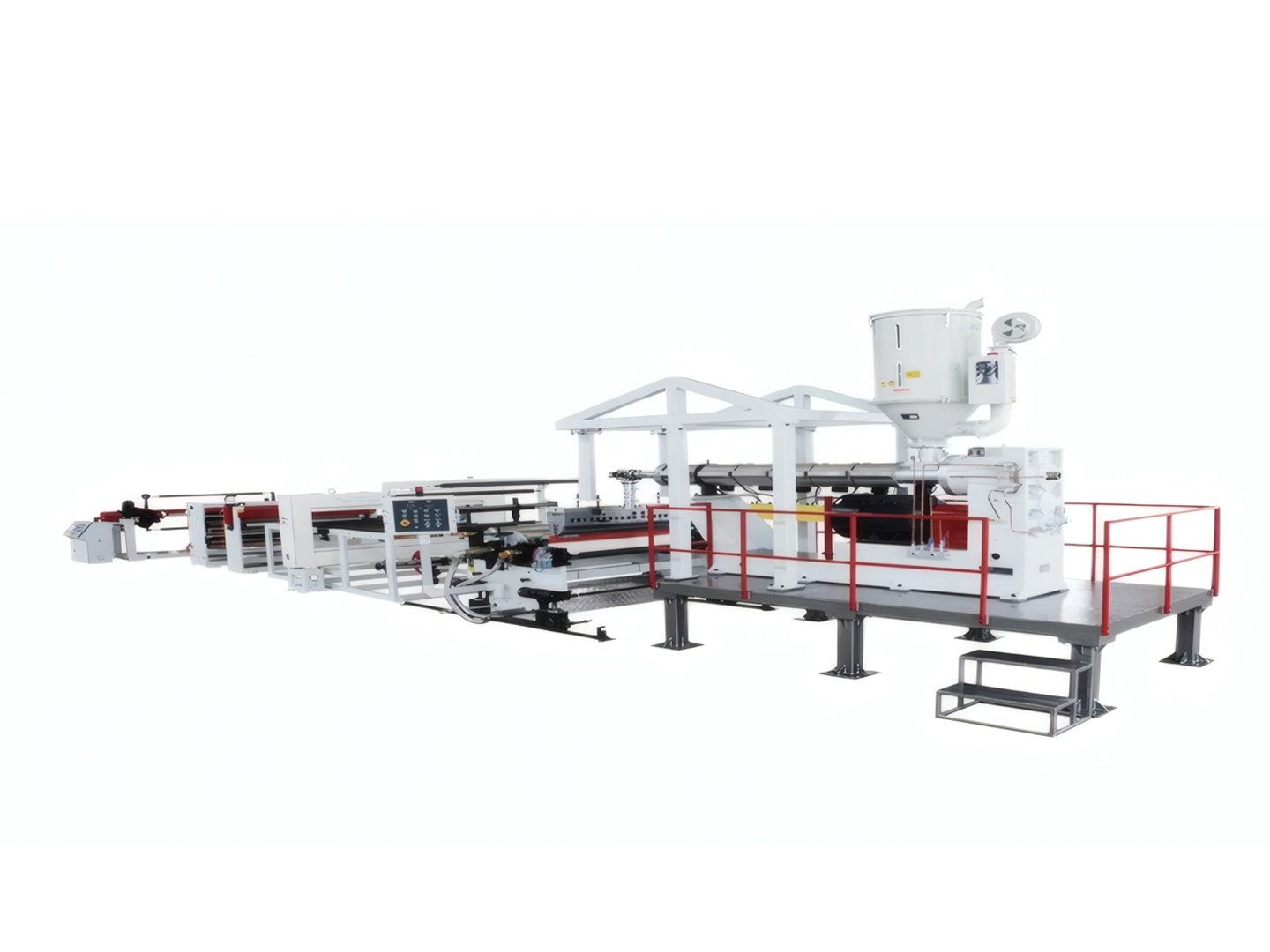
5. Winding Issues
Problems with winding the stretch film can lead to uneven rolls, telescoping, and difficulty in unwinding the film during use.

Causes:
- Tension Variation: Inconsistent tension during the winding process can cause the film to wind unevenly, resulting in telescoping or loose rolls.
- Roll Surface Irregularities: Rough or dirty roll surfaces can cause the film to stick unevenly, leading to winding problems.
- Winding Speed and Alignment: Incorrect winding speed or misalignment of the winding equipment can also result in poor winding quality.
Solutions:
- Tension Control: Use a tension control system to maintain a constant tension during the winding process. Adjust the tension based on the film thickness and width.
- Roll Surface Maintenance: Keep the winding rolls clean and smooth. Regularly inspect the rolls for any damage or irregularities and replace them if necessary.
- Proper Alignment and Speed: Ensure that the winding equipment is properly aligned and that the winding speed is appropriate for the film production rate.
Contact for Purchase and Consultation
If you are facing any of these problems with your stretch film line or are considering purchasing a new one, we are here to help. Our company has extensive experience in providing high - quality stretch film lines, such as the POE/PVB/SGP/EVA Film Extrusion Line, CPP Cast Film Extrusion Line, and ASA Roof Tile Extrusion Line. We offer customized solutions to meet your specific production needs. Contact us to discuss your requirements and let us help you optimize your stretch film production process.
References
- Modern Plastics Encyclopedia. Various editions.
- Extrusion: The Definitive Processing Guide and Handbook by Christopher Rauwendaal.
- Polymer Processing: Principles and Design by Zehev Tadmor and Costas G. Gogos.