


In the realm of board extrusion technology, the die stands as a cornerstone component within a board extrusion line. As a seasoned supplier of board extrusion lines, I've witnessed firsthand the pivotal role that the die plays in the entire production process. This blog post aims to delve into the intricacies of the die's function, its impact on the final product, and how it contributes to the overall efficiency of a board extrusion line.
The Fundamental Function of the Die
At its core, the die in a board extrusion line serves as the gateway through which molten plastic material is transformed into a specific board shape. It is essentially a precision - engineered tool that dictates the cross - sectional profile of the extruded board. When the plastic resin is melted and pushed through the extruder, it reaches the die. The die has a carefully designed cavity that the molten plastic must flow through. This cavity is shaped according to the desired dimensions and features of the final board product.
For example, if we are producing a PVC foam board, the die will be designed to create the appropriate thickness, width, and surface texture of the board. The die's internal channels ensure that the plastic material is evenly distributed across the width of the board, preventing any irregularities in thickness or density. This is crucial because a uniform board is essential for its performance in various applications, such as construction, advertising, and packaging.

Impact on Product Quality
The die has a profound influence on the quality of the extruded board. One of the key aspects it affects is the surface finish. A well - designed die can produce a smooth, blemish - free surface on the board. This is particularly important for applications where the appearance of the board matters, like in high - end interior decoration. Any imperfections in the die's surface or flow channels can result in surface defects such as streaks, bumps, or uneven gloss on the board.
Another quality factor is the board's mechanical properties. The die can control the orientation of the polymer molecules during the extrusion process. Proper molecular orientation can enhance the board's strength, stiffness, and impact resistance. For instance, in the production of HDPE or PP foam boards, the die can be designed to align the polymer chains in a way that maximizes the board's load - bearing capacity. This is essential for applications where the board will be subjected to significant stress, such as in industrial flooring or structural components.
Influence on Production Efficiency
The die also plays a vital role in determining the production efficiency of a board extrusion line. A well - optimized die allows for a high - speed extrusion process. By ensuring a smooth and even flow of the molten plastic, the die reduces the risk of blockages or pressure fluctuations in the extrusion line. This means that the line can run continuously at a consistent speed, increasing the overall output of the production.
Moreover, a good die design can minimize the amount of waste generated during the extrusion process. When the plastic material flows evenly through the die, there is less need for trimming or reworking of the extruded boards. This not only saves raw materials but also reduces the time and labor required for post - processing. For example, in the production of PP/PC hollow sheet extrusion lines, an efficient die design can ensure that the hollow structures are formed precisely, reducing the likelihood of defective sheets that would otherwise need to be discarded.
Types of Dies for Different Board Extrusion Lines
There are various types of dies available, each tailored to specific board extrusion requirements. For PVC Foam Board Production Line, a foam die is commonly used. This type of die is designed to accommodate the foaming agent in the PVC resin and create a uniform foam structure within the board. It has special features such as gas injection ports and flow - control mechanisms to ensure that the foam cells are evenly distributed throughout the board.
In the case of HDPE PP Foam Board Production Line, a different die design may be required. These boards often have different density and cell size requirements compared to PVC foam boards. The die for HDPE or PP foam boards needs to be able to handle the higher melting temperatures and different flow characteristics of these polymers.
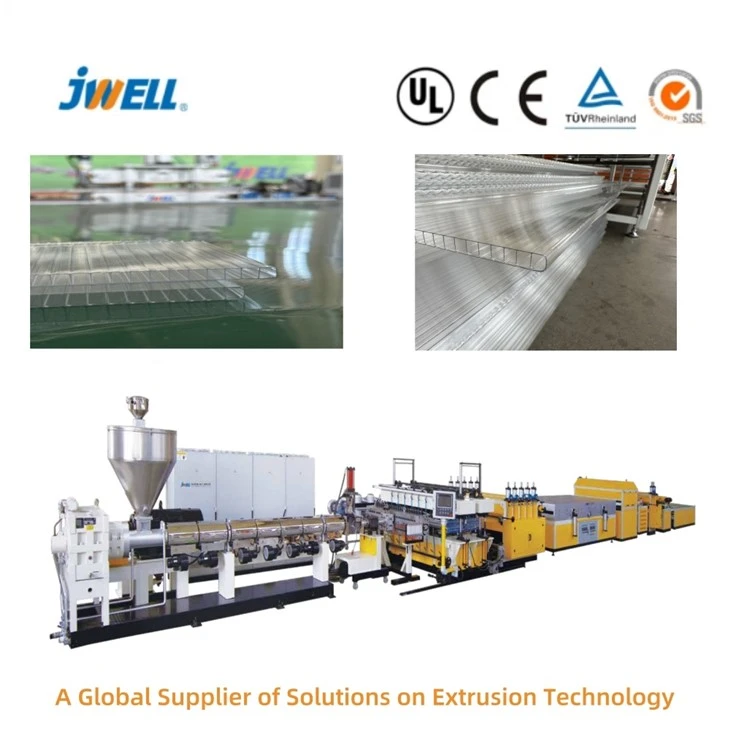
For PP/PC Hollow Sheet Extrusion Line, a hollow die is used. This die is designed to create the characteristic hollow channels within the sheet. It has multiple internal flow channels that separate the plastic material into different layers, forming the hollow structure. The die's design must ensure that the walls of the hollow channels are of uniform thickness and that the channels are properly aligned.
Maintenance and Optimization of the Die
To ensure the long - term performance of the die and the quality of the extruded boards, regular maintenance is essential. The die should be cleaned periodically to remove any residual plastic or contaminants that may accumulate inside the flow channels. This helps to maintain a smooth flow of the molten plastic and prevents blockages.
In addition, the die may need to be optimized over time. As new materials are developed or production requirements change, the die's design may need to be adjusted. This could involve modifying the internal flow channels, changing the die's surface finish, or adjusting the temperature control settings. Our company, as a professional board extrusion line supplier, offers comprehensive maintenance and optimization services for the dies in our extrusion lines.
Conclusion
In conclusion, the die is an indispensable component in a board extrusion line. It is responsible for shaping the board, determining its quality, and influencing the production efficiency. Whether it's a PVC foam board, HDPE/PP foam board, or PP/PC hollow sheet, the die plays a central role in the manufacturing process.
If you are in the market for a high - quality board extrusion line or need assistance with your existing line, we are here to help. Our team of experts has extensive experience in designing, manufacturing, and optimizing board extrusion lines and their dies. Contact us to discuss your specific requirements and explore how we can provide you with the best solutions for your board extrusion needs.
References
- "Extrusion Dies: Design and Engineering Computations" by Rauwendaal, C.
- "Plastics Extrusion Technology" by Strong, A. B.
- Industry reports on board extrusion technology from leading research institutions.


