


Hey everyone, if you’re deep in the world of plastic processing, you’ve probably wondered at some point how long that big ABS sheet extrusion line you’re eyeing (or already running) will actually last. As a supplier that’s been helping factories get the right equipment for years, I talk to producers every week who’re stressed about wasting money on gear that conks out too soon, or buying something so cheap it falls apart in a year. Let’s break this down straight, no sales fluff, just the real deal on what determines an ABS sheet extrusion line’s service life.
First off, let’s get one thing clear: there’s no one-size-fits-all number here. You’ll hear folks throw around “10 years” or “20 years,” but that’s a rough ballpark—like saying a car will last 10 years. It might, if you change the oil regularly, don’t drive it like you’re racing, and fix small issues before they become big ones. But if you never maintain it, ignore weird noises, and overload it every day, even a top-tier car dies in 5. Same goes for an ABS sheet line.
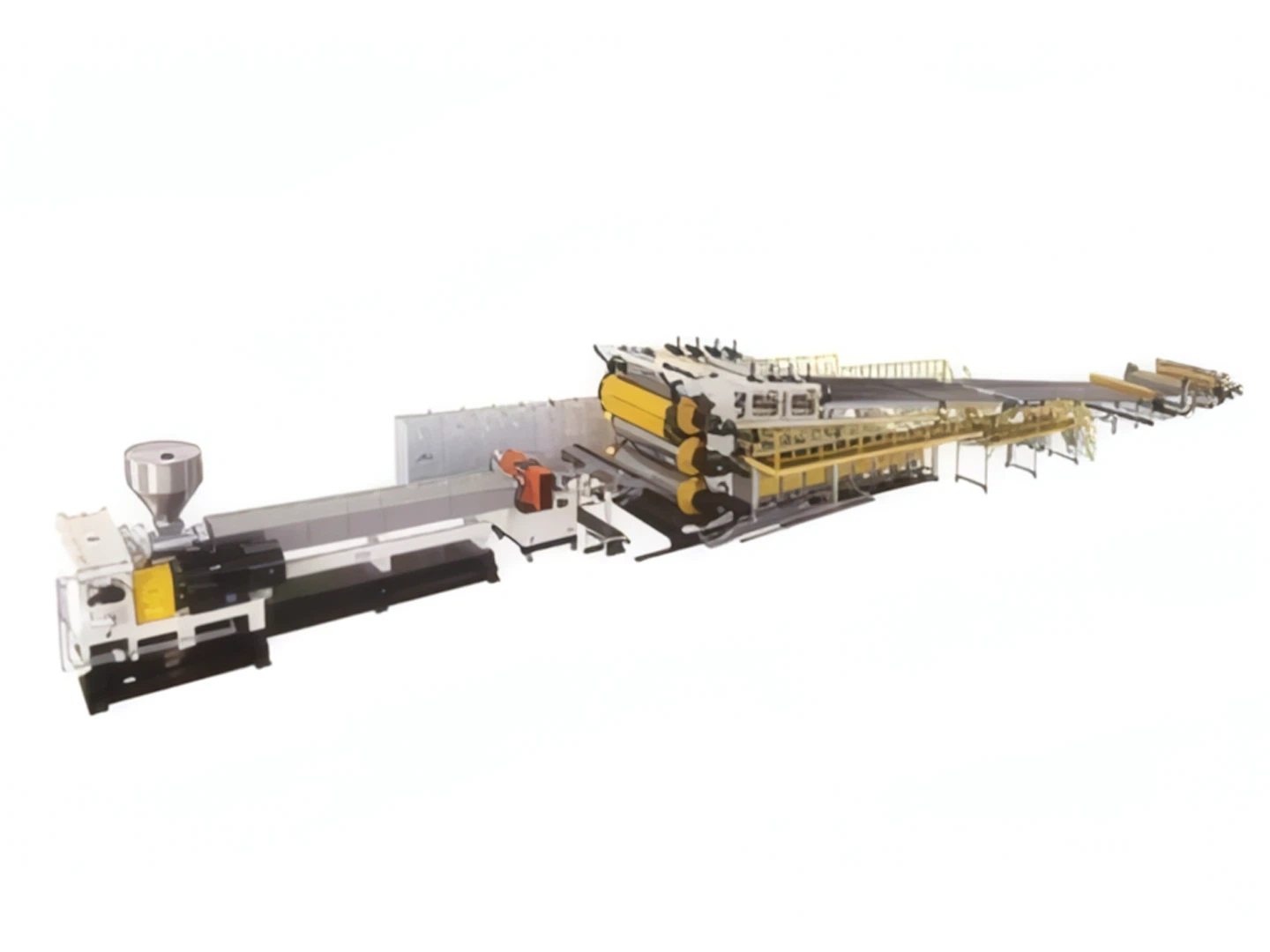
Let’s start with the core components, because that’s where the longevity lives. The extruder itself is the heart. A good, well-built single-screw extruder (most common for ABS sheets) has a barrel and screw made from high-grade steel—usually nitrided or bimetallic—to handle the friction and heat from melting ABS. Cheaper lines often use regular steel, which wears out fast from the plastic’s additives (ABS has impact modifiers and stabilizers that can be abrasive over time). I’ve seen budget ABS lines where the screw starts to develop grooves after just 3 years, which messes up melt consistency and ruins sheet quality. A quality extruder from a reputable setup? That barrel and screw can go 15+ years if you’re maintaining it right.
Then there’s the die—this is the part that shapes the molten ABS into that flat sheet you need for things like fridge liners, automotive trim, or signage. Die wear is a big one. If the die is precision-machined from corrosion-resistant material, it can last a long time, but if you’re running it with dirty ABS (contaminants like metal shavings or leftover plastic from previous runs), it’ll get pitted and worn, leading to uneven sheet thickness. We always tell our clients to filter their raw ABS properly, and to do a simple die cleanup every few weeks—like flushing with a purge compound when switching materials. Even with that, a die can easily last 10 years or more, but skimp on maintenance, and you might need to replace it in 5.
Next up, the downstream equipment: the calibrator (that’s the flat table that sets the sheet’s thickness as it cools), the rollers, the puller, the cutter, and the winding station. These parts might not get as much attention as the extruder, but they’re crucial. The calibrator has cooling channels that can get clogged with built-up plastic residue if you don’t flush them regularly, which leads to uneven cooling and warped sheets. Rollers can get scratched or have rubber coatings wear down, affecting sheet flatness. A lot of people forget that these downstream parts are often where lines start to fail prematurely, not the extruder. I’ve had a client reach out last year saying their line was “dead” after 7 years, but it turned out the calibrator’s cooling lines were so clogged they couldn’t keep the sheet cool enough—once we cleaned them up and did a minor roller resurfacing, it was running like new for another 4+ years.
Now, what about the stuff that’s not parts, but how you use the line? That’s called “operating conditions,” and it’s the biggest variable by far. Let’s say you run your line 24/7, 365 days a year, with barely any downtime for maintenance, and you overload the extruder (cranking the speed way above its rated capacity to hit more output) every shift. That line’s not going to last 10 years—maybe 5, if you’re lucky. On the flip side, if you run it 8 hours a day, 5 days a week, do all the scheduled maintenance, don’t overload it, use high-quality raw ABS, and fix small issues (like a loose roller bearing) the second you notice a weird noise? That line could easily hit 20 years. I’ve even seen some well-built lines that are still cranking out good ABS sheets after 25 years—though those are the exception, not the rule.
Wait, but here’s a common question: should you expect to replace parts before the whole line’s done? Yeah, of course. No line runs forever without any part swaps. Over time, things like bearings, belts, seals, and the cooling pumps will wear out. These are all routine maintenance items, not signs the whole line is garbage. A lot of new operators get spooked when they have to replace a part after 5 years, thinking their line is dying—but that’s normal. The key is that these parts are easy to swap, and the core components (screw, barrel, die) are still going strong.
Now, let’s talk about how this compares to other extrusion lines, just to put it in perspective. If you’re looking at other types, like PVC ASA Waved Sheet Production Line or HDPE PP Foam Board Production Line, their service lives follow the same basic rules—build quality, maintenance, operating conditions. Same with PP/PE Plastic Hollow Board Extrusion Line, PVC Foam Board Extrusion Line, and even ABS HDPE PP Sheet Extrusion Line. All of them depend on those three factors to hit their maximum lifespan.
Another big one: raw material quality. A lot of people don’t realize that the ABS resin you feed into the line affects longevity too. If you’re using cheap, contaminated ABS that has high levels of fillers or moisture, that’s harder on the screw and barrel. Moisture in ABS can cause splay (those little surface spots) and even create pressure spikes that stress the extruder. Properly drying your ABS before it goes into the hopper is non-negotiable—we always advise our clients to add a good dryer, because not only does it improve sheet quality, it reduces wear on the machine parts.
So what’s the real takeaway for your ABS sheet extrusion line? Let’s put it all together:
- A budget, entry-level line (low-quality parts, basic machining): 5-10 years, maybe less if you run it hard. Good for small startups that don’t want to spend a ton upfront, but you’ll have to replace parts often.
- A mid-tier line (quality components, decent machining): 10-15 years with regular maintenance. That’s the sweet spot for most factories, balancing cost and longevity.
- A high-end, heavy-duty line (precision parts, premium materials, built for 24/7 runs): 15-20+ years, if you keep up with maintenance. Perfect for large manufacturers running high volumes every day.
Wait, but what if you outgrow your line before it wears out? That’s a real thing too. Technology changes, or your production needs go up, so you might upgrade to a bigger line or a different type way before the ABS line reaches the end of its physical life. But that’s a business decision, not a machine failure.
Now, if you’re in the market for an ABS sheet extrusion line, or you have one that’s starting to show signs of wear, the most important thing is to partner with a supplier who knows their stuff. We’ve worked with all kinds of factories, from small shops to big production facilities, helping them pick lines that fit their usage needs, and offering maintenance tips to keep their equipment running for years. Whether you need a new line, replacement parts, or just advice on getting more life out of your current setup, don’t hesitate to reach out. We’re here to help you avoid the headaches of premature machine failure and get the most out of your investment.
At the end of the day, the service life of your ABS sheet extrusion line isn’t a fixed number—it’s something you control, mostly through how well you maintain it, how you run it, and the quality of the line itself. Skip the cheap budget lines if you want to stay in business long-term, don’t skip maintenance (even if it feels like a hassle), and don’t be afraid to ask for help when you need it. Your line is a big investment, so treat it right, and it’ll treat you right for years to come.

References:
- Plastic Extrusion Technology: Equipment Durability and Maintenance Guidelines, 2022, Society of Plastics Engineers
- "Service Life Assessment of Thermoplastic Extrusion Lines," Journal of Polymer Processing Machinery, Vol. 18, No. 3, 2021
- Maintenance Best Practices for Plastic Processing Equipment, 2023, Plastics Machinery Manufacturers Association
- "Factors Affecting Extrusion Component Wear and Longevity," Journal of Applied Polymer Science, Vol. 140, No. 12, 2023
- Operational Efficiency and Equipment Lifecycle in Sheet Extrusion, 2022, Industrial Plastics Association


