


Hey there! I'm a supplier of sheet production lines, and I've been thinking a lot about the future of our industry. One question that keeps popping up is, "Can the sheet production line be upgraded in the future?" Well, let's dive right in and explore this topic.
First off, let's talk about why upgrading sheet production lines is even a consideration. The manufacturing world is constantly evolving. New materials are being developed, consumer demands are changing, and there's always pressure to be more efficient and environmentally friendly. If we want to stay competitive, upgrading our production lines isn't just an option; it's a necessity.
One of the key areas where upgrades can make a huge difference is in terms of technology. The current sheet production lines, while reliable, often lack the latest technological advancements. For example, the integration of artificial intelligence (AI) and machine learning can revolutionize the way we operate these lines. AI can be used to monitor the production process in real - time, detect any potential issues before they become major problems, and optimize the production parameters for maximum efficiency.
Let's say we're using a Pvc Foam Board Production Line. With AI, we can adjust the temperature, pressure, and speed of the extrusion process based on the quality of the output. This not only improves the quality of the PVC foam boards but also reduces waste. Machine learning algorithms can analyze historical data to predict maintenance needs, ensuring that the production line runs smoothly without unexpected breakdowns.
Another area where upgrades can be beneficial is in energy efficiency. As the world becomes more conscious of environmental issues, reducing energy consumption in manufacturing has become a top priority. Upgrading the motors, heating systems, and control panels in sheet production lines can lead to significant energy savings. For instance, modern servo - driven motors are much more energy - efficient than traditional motors. They can adjust their power consumption based on the actual load, reducing energy waste.
In addition to energy efficiency, upgrades can also enhance the flexibility of sheet production lines. The market is constantly demanding different types of sheets, with varying thicknesses, sizes, and materials. A flexible production line can easily switch between producing different products without requiring extensive retooling. Take the Pp Honeycomb Board Extrusion Line for example. An upgraded line can be programmed to produce honeycomb boards of different cell sizes and densities, meeting the diverse needs of customers.
The integration of advanced sensors is also a crucial aspect of future upgrades. Sensors can be used to measure various parameters such as thickness, density, and surface quality of the sheets during the production process. This real - time data can be used to make immediate adjustments, ensuring that the final product meets the required specifications. For the Abs Hdpe Pp Sheet Extrusion Line, sensors can detect any inconsistencies in the extrusion process and trigger corrective actions, resulting in higher - quality sheets.
Now, let's address some of the challenges that come with upgrading sheet production lines. One of the biggest challenges is the cost. Upgrading a production line can be a significant investment, especially when it involves installing new technology and equipment. However, it's important to look at the long - term benefits. The cost savings from increased energy efficiency, reduced waste, and improved productivity can quickly offset the initial investment.
Another challenge is the need for skilled labor. Upgraded production lines often require operators with a higher level of technical knowledge. To overcome this, companies need to invest in training programs for their employees. This will not only ensure that the new technology is used effectively but also empower the workforce and increase job satisfaction.
In terms of the future trends, we can expect to see more automation in sheet production lines. Robots can be used for tasks such as material handling, quality inspection, and packaging. This not only reduces the risk of human error but also increases the speed and accuracy of the production process.

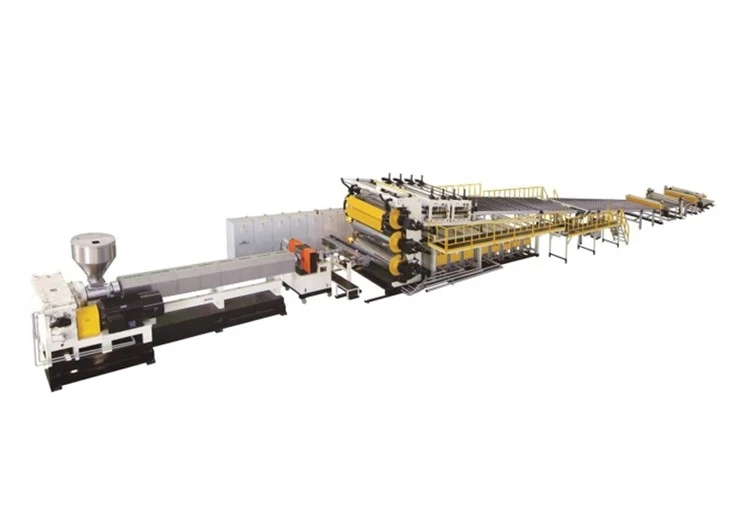
The use of 3D printing technology in sheet production is also an exciting possibility. 3D printing can be used to create custom - designed molds and tooling, allowing for greater flexibility in product design. It can also be used to produce small - batch, high - value sheets with complex geometries.
In conclusion, the sheet production line can definitely be upgraded in the future. The benefits of upgrading, such as increased efficiency, improved quality, and greater flexibility, far outweigh the challenges. As a supplier of sheet production lines, I'm excited about the possibilities that the future holds.
If you're in the market for a new sheet production line or thinking about upgrading your existing one, I'd love to have a chat with you. We can discuss your specific needs, explore the available upgrade options, and find the best solution for your business. Whether it's a Pvc Foam Board Production Line, a Pp Honeycomb Board Extrusion Line, or an Abs Hdpe Pp Sheet Extrusion Line, we've got the expertise and the technology to meet your requirements.
References:
- Industry reports on sheet production technology advancements
- Research papers on energy efficiency in manufacturing
- Case studies on successful production line upgrades


