


How to adjust the alignment of the cutting blades in a strand pelletizer?
Managing a strand pelletizer effectively is crucial for consistent and high - quality pellet production. A key aspect of this operation is the proper alignment of the cutting blades. As a well - established strand pelletizer supplier, we have extensive experience in this domain, and we're excited to share our insights on how to achieve accurate blade alignment.
1. Understand the Importance of Blade Alignment
Before delving into the adjustment process, let's first understand why blade alignment is so crucial. In a strand pelletizer, the cutting blades are responsible for transforming extruded strands into uniform pellets. Misaligned blades can lead to a plethora of issues. For instance, uneven cuts may result in pellets of inconsistent sizes. These non - uniform pellets can cause problems downstream in the manufacturing process, such as poor flow properties and reduced product quality. Additionally, misaligned blades increase the wear and tear on the blading system, shortening the lifespan of the blades and increasing maintenance costs. Consistent blade alignment ensures smooth operation, high - quality pellet output, and cost - effective production.
2. Tools and Equipment
To adjust the alignment of the cutting blades, you'll need a few essential tools. First and foremost, a precision measuring tool like a feeler gauge is necessary. A feeler gauge allows you to accurately measure the gap between the blades, ensuring it is within the specified tolerance for your strand pelletizer model. You'll also need a set of precision screwdrivers and wrenches to loosen and tighten the mounting bolts that hold the blades in place. A flashlight comes in handy, as it helps you inspect hard - to - reach areas and ensures there are no obstructions or signs of damage.
3. Preparation Steps
Before you start the adjustment process, it is essential to shut down the strand pelletizer and disconnect it from the power source. This is a safety precaution to prevent any accidental start - up during the adjustment process. Next, remove the cutting chamber cover to gain access to the blades. Inspect the blades for any signs of wear, damage, or debris. If the blades are severely worn or damaged, they may need to be replaced before attempting alignment. Clean the blades and the surrounding area thoroughly to ensure accurate measurement and adjustment.
4. Initial Inspection and Measurement
Once you have prepared the pelletizer and gained access to the blades, conduct an initial inspection. Check the alignment of the blades visually. Look for any obvious signs of misalignment, such as blades that are not parallel or have a significant gap at one end. Then, use the feeler gauge to measure the gap between the stationary and rotating blades at multiple points. Most strand pelletizers have a recommended gap range, typically between 0.05mm to 0.2mm, depending on the type of material being pelletized and the pellet size requirements. Record these measurements for reference during the adjustment process.
5. Adjustment Process
If the blade gap measurements are outside the recommended range, it's time to adjust the alignment. Start by loosening the mounting bolts that hold the stationary blade. Do not remove the bolts completely; just loosen them enough to allow for adjustment. Use the precision screwdrivers or wrenches to make small, incremental adjustments to the position of the stationary blade. As you make these adjustments, continuously measure the blade gap at multiple points using the feeler gauge. Make sure to make adjustments in a systematic way, moving the blade evenly to maintain parallelism.
Once you have adjusted the stationary blade, check the alignment again. If necessary, make further minor adjustments to achieve the desired gap. After the stationary blade is properly aligned, check the alignment of the rotating blade. The rotating blade should also be parallel to the stationary blade, and the gap should be consistent across its length. If the rotating blade is misaligned, you may need to adjust the drive system or the blade mounting mechanism, following the manufacturer's instructions.
6. Final Checks and Testing
After making the necessary adjustments, tighten the mounting bolts securely. Double - check the blade gap one last time to ensure it is within the recommended tolerance. Reinstall the cutting chamber cover and reconnect the power source. Before resuming full - scale production, run a test batch of strands through the pelletizer at a low speed. Inspect the resulting pellets for size and shape consistency. If the pellets are still not of the desired quality, you may need to make further adjustments to the blade alignment.
7. Maintenance and Monitoring for Long - term Alignment
Proper maintenance is key to maintaining blade alignment over time. Regularly clean the blades and the cutting chamber to prevent the buildup of debris, which can affect alignment. Lubricate the moving parts of the pelletizer as recommended by the manufacturer to ensure smooth operation. Additionally, establish a monitoring schedule to periodically check the blade alignment. This proactive approach can help you catch any misalignment issues early, preventing costly production disruptions and ensuring consistent pellet quality.
8. Related Equipment for Compounding
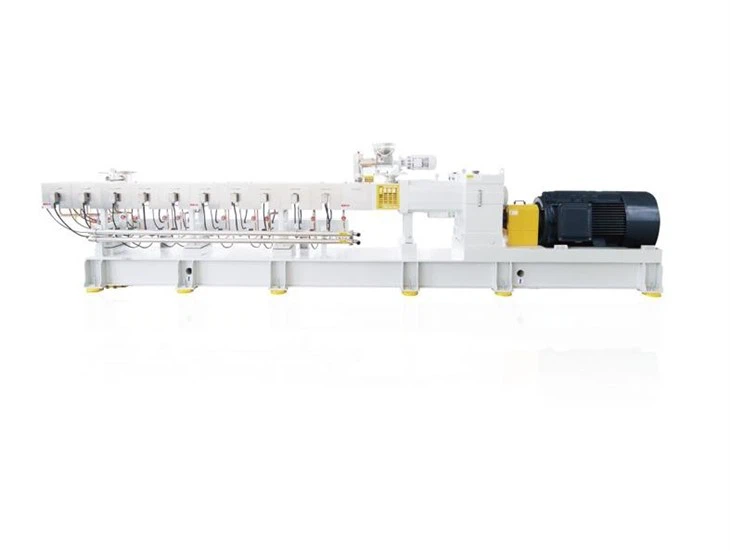
As a strand pelletizer supplier, we also offer a range of complementary equipment for compounding processes. For example, our Long - fiber Reinforce Thermoplastic Extrusion Line is designed to handle the extrusion of long - fiber reinforced thermoplastics, providing high - performance and efficient production. Our Ht High Torque Series Twin Screw Plastic Extruder offers high torque and excellent mixing capabilities, making it suitable for a wide variety of compounding applications. And our Hc Middle Torque Series Co Rotating Twin Screw Extruder provides a cost - effective solution for middle - torque compounding requirements.

Conclusion
Proper alignment of the cutting blades in a strand pelletizer is a critical aspect of achieving high - quality pellet production. By following the steps outlined above, you can ensure accurate blade alignment, leading to consistent pellet sizes, reduced wear and tear, and lower maintenance costs. If you have any questions about blade alignment or are interested in our range of strand pelletizers and complementary compounding equipment, we encourage you to contact us for procurement and in - depth discussions. Our team of experts is ready to assist you in finding the best solutions for your production needs.
References
- Strand Pelletizer Operation Manuals.
- Industry best practices in plastic pelletizing and compounding.


