


Ensuring the flatness of boards produced by a board extrusion line is a critical aspect of the manufacturing process. As a seasoned supplier of board extrusion lines, I understand the challenges and complexities involved in achieving the desired flatness. In this blog post, I will share some insights and strategies on how to ensure the flatness of boards during the extrusion process.
Understanding the Importance of Flatness
Flatness is a crucial quality parameter for boards used in various applications, such as construction, packaging, and automotive industries. Boards with poor flatness can lead to issues such as warping, uneven surfaces, and difficulty in installation. Therefore, maintaining high flatness is essential to meet the quality requirements of customers and ensure the proper functioning of the final products.

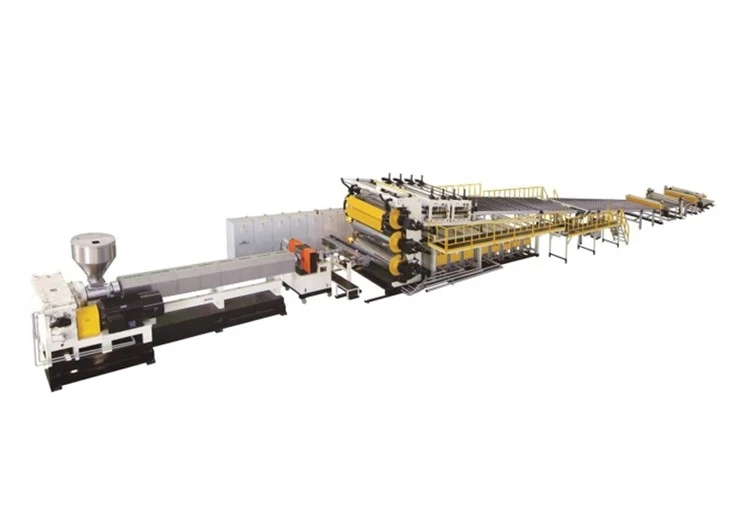
Factors Affecting Board Flatness
Several factors can influence the flatness of boards produced by an extrusion line. Understanding these factors is the first step in developing effective strategies to ensure flatness.
Material Properties
The properties of the raw materials used in the extrusion process play a significant role in determining the flatness of the boards. Different polymers have different shrinkage rates, which can cause warping and unevenness during cooling. For example, materials with high shrinkage rates, such as polypropylene (PP) and polyethylene (PE), are more prone to warping compared to materials with lower shrinkage rates, such as acrylonitrile butadiene styrene (ABS).
Extrusion Process Parameters
The extrusion process parameters, including temperature, pressure, and speed, can also affect the flatness of the boards. Improper temperature control can lead to uneven cooling and shrinkage, resulting in warping. Similarly, inconsistent pressure and speed can cause variations in the thickness and density of the boards, leading to flatness issues.
Die Design
The design of the extrusion die is another critical factor that affects the flatness of the boards. A well-designed die ensures uniform flow of the molten polymer, which is essential for achieving consistent thickness and flatness. Die design factors such as die lip gap, land length, and flow distribution can significantly impact the quality of the extruded boards.
Cooling System
The cooling system is responsible for solidifying the molten polymer and controlling the shrinkage rate of the boards. An inefficient cooling system can cause uneven cooling, leading to warping and unevenness. Therefore, it is essential to have a well-designed cooling system that provides uniform cooling across the entire width of the boards.
Strategies for Ensuring Board Flatness
Based on the factors mentioned above, here are some strategies that can be implemented to ensure the flatness of boards produced by a board extrusion line:
Select the Right Materials
Choosing the right materials with low shrinkage rates and good dimensional stability is crucial for achieving high flatness. As a supplier, we offer a wide range of extrusion lines suitable for different materials, such as Hips/gpps/pp/pe/eva/abs Sheet Extrusion Line and Abs Hdpe Pp Sheet Extrusion Line. Our technical team can help you select the most appropriate materials and extrusion line based on your specific requirements.
Optimize Extrusion Process Parameters
Proper control of the extrusion process parameters is essential for ensuring uniform flow and cooling of the molten polymer. This includes maintaining consistent temperature, pressure, and speed throughout the extrusion process. Advanced control systems can be used to monitor and adjust these parameters in real-time, ensuring optimal performance and flatness.
Design a High-Quality Die
Investing in a high-quality extrusion die is crucial for achieving consistent flatness. The die should be designed to provide uniform flow of the molten polymer, with precise control over the die lip gap and land length. Our company has a team of experienced die designers who can customize the die design based on your specific requirements, ensuring the best possible flatness and quality of the extruded boards.
Implement an Efficient Cooling System
An efficient cooling system is essential for controlling the shrinkage rate of the boards and ensuring uniform cooling. This can include using water-cooled chill rolls, air cooling systems, or a combination of both. The cooling system should be designed to provide consistent cooling across the entire width of the boards, minimizing the risk of warping and unevenness.
Conduct Regular Quality Checks
Regular quality checks are essential for detecting and correcting any flatness issues early in the production process. This can include visual inspections, thickness measurements, and flatness testing using specialized equipment. By monitoring the quality of the boards at regular intervals, you can identify any potential problems and take corrective actions before they become significant issues.
Case Study: Ensuring Flatness in PVC Foam Board Extrusion
To illustrate the effectiveness of the strategies mentioned above, let's consider a case study of a PVC foam board extrusion line. PVC foam boards are widely used in the construction and advertising industries due to their lightweight, high strength, and excellent insulation properties. However, achieving high flatness in PVC foam board extrusion can be challenging due to the foaming process and the high shrinkage rate of PVC.
In this case study, a customer was experiencing significant flatness issues with their PVC foam board extrusion line. The boards were warping and uneven, which was causing problems in the subsequent processing and installation. Our technical team conducted a detailed analysis of the extrusion process, including the material properties, extrusion parameters, die design, and cooling system.
Based on the analysis, we recommended several improvements to the extrusion process. First, we optimized the extrusion parameters, including the temperature, pressure, and speed, to ensure uniform flow and cooling of the molten PVC. Second, we redesigned the extrusion die to provide better control over the foaming process and improve the flow distribution of the molten polymer. Third, we implemented an advanced cooling system that provided more consistent cooling across the entire width of the boards.
After implementing these improvements, the customer noticed a significant improvement in the flatness of the PVC foam boards. The warping and unevenness were reduced to a minimum, and the boards met the required quality standards. The customer was very satisfied with the results and was able to increase their production efficiency and reduce their scrap rate.
Conclusion
Ensuring the flatness of boards produced by a board extrusion line is a complex but achievable goal. By understanding the factors that affect flatness and implementing the strategies mentioned above, you can significantly improve the quality of your extruded boards and meet the requirements of your customers. As a leading supplier of board extrusion lines, we have the expertise and experience to help you optimize your extrusion process and achieve the best possible flatness and quality.
If you are interested in learning more about our board extrusion lines or have any questions about ensuring flatness in your extrusion process, please feel free to contact us. Our team of experts will be happy to assist you and provide you with the solutions you need to succeed in your business.
References
- "Plastics Extrusion Technology" by Allan A. Griff.
- "Extrusion Dies for Plastics and Rubber" by John A. Mallouk.
- "Handbook of Plastic Foams" by Desmond E. Floyd.


