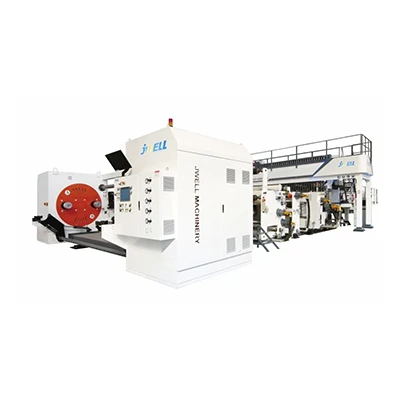
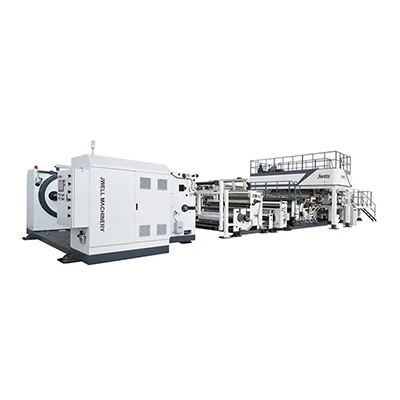
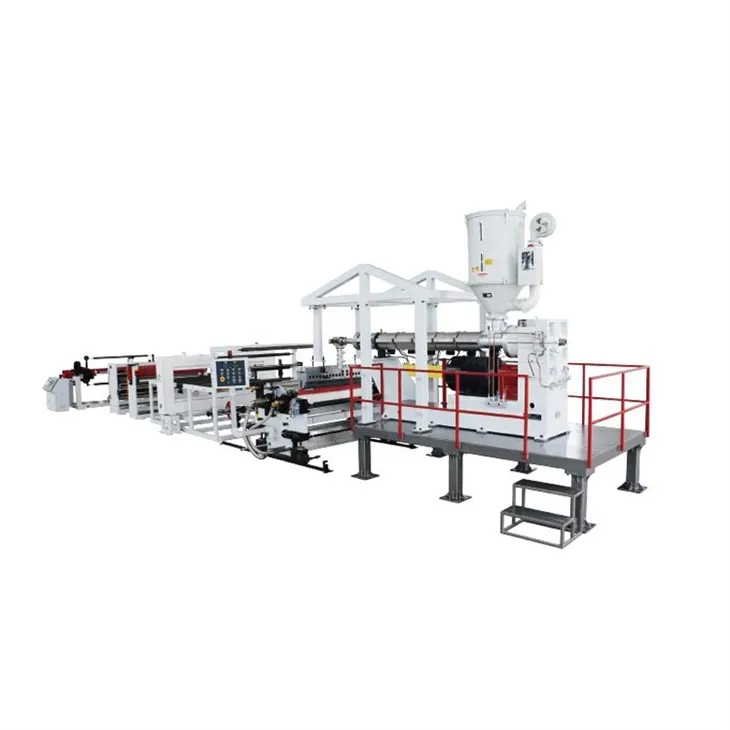
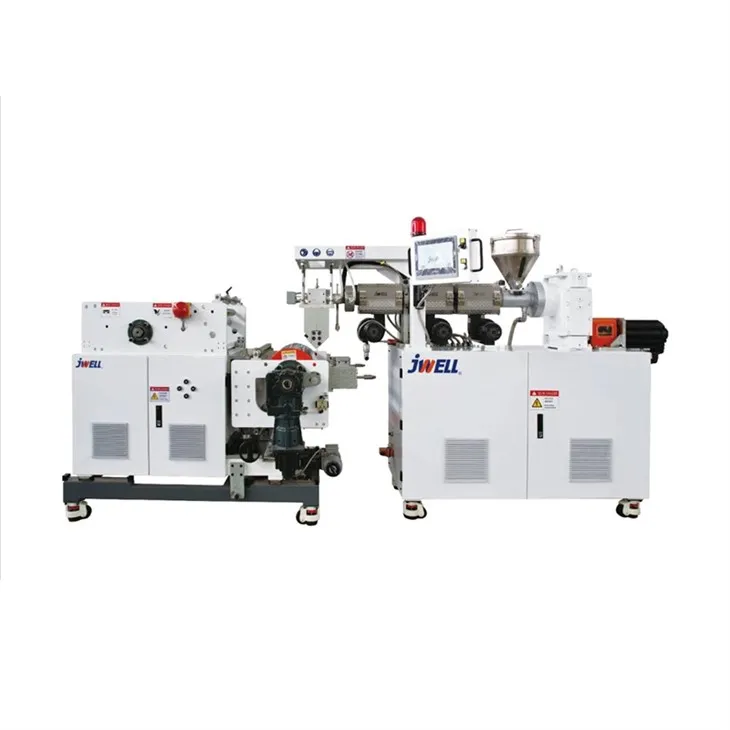
As a manufacturer of cast film line, Jwell cast film production lines are often used by customers to produce various cast films. Through the special cast extrusion process of our equipment, the cast films produced have: uniform thickness, smooth surface, and excellent optical properties. The basic principle of cast film production is to heat and melt the thermoplastic resin, extrude it into a molten film through a flat die, and then quickly cool and solidify it on a cooling roller, and finally pull and roll it into the final product. This process supports high-speed continuous production and stable product performance. It is one of the main technologies for plastic film manufacturing today.
In the process of using cast film line to produce cast film, the following key steps are generally required
a. Raw Material Preparation: Plastic pellets must be dried and mixed to ensure purity and appropriate moisture content.
b. Extrusion and Plasticizing: The raw materials are melted and plasticized in the extruder through heating and shearing, while filtration systems remove impurities.
c. Cast Film Forming: The molten plastic is extruded through a precisely designed flat die, forming a uniform molten film curtain.
d. Cooling and Solidifying: The film is rapidly cooled and solidified on the chill roll, a process that critically affects the film's physical properties.
e. Haul-Off and Winding: The film is accurately wound into rolls using precise tension control systems.
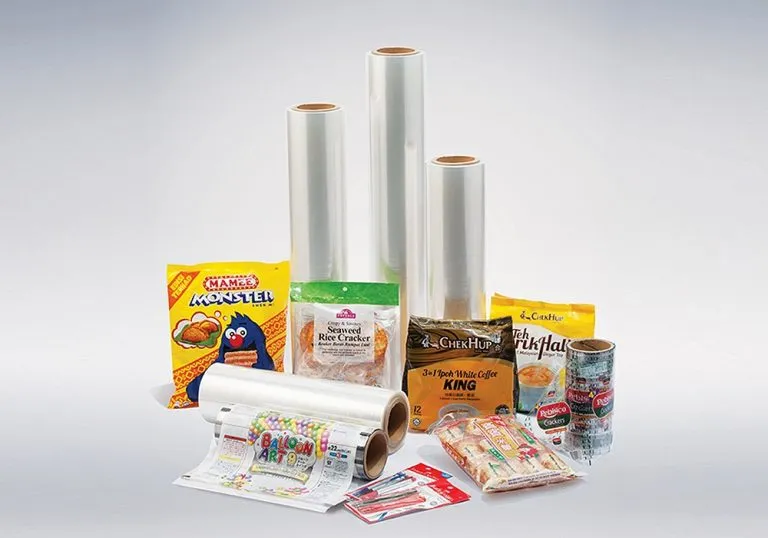
Throughout the production process of the cast film line, temperature control, die design, cooling efficiency and tension adjustment are critical to product quality. The temperature zone in the extruder must be precisely adjusted according to the material characteristics. The straightness and uniformity of the die lip directly affect the thickness distribution. The temperature and surface condition of the cooling roller affect the transparency and glossiness of the film, while the stable winding tension ensures the flatness and subsequent processing performance of the film. Our Jwell cast film line is equipped with an advanced automation system that can accurately monitor and adjust these parameters to ensure consistent product quality.
Material Properties and Common Types of Cast Film
Materials used for cast film must possess good melt flow, thermal stability, and film-forming ability. Resins suitable for cast film production typically feature a moderate melt index, low melt viscosity, and excellent thermal stability. Crystallization behavior, molecular weight distribution, and additive systems also significantly affect processability and film performance.
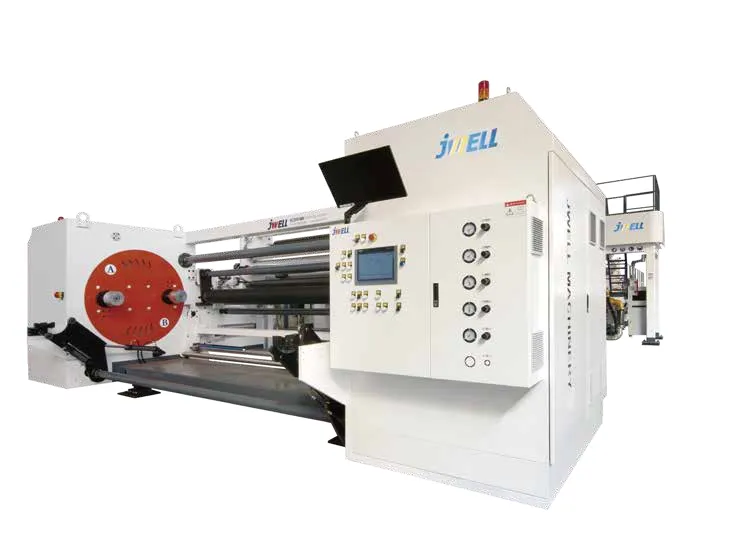
Common resins for cast film include general-purpose plastics such as Polypropylene (PP), Polyethylene (PE), Polyester (PET), and Polyamide (PA), as well as specialty materials like Polyvinylidene Fluoride (PVDF) and Ethylene-Vinyl Acetate (EVA).
Depending on the material, cast film can be classified into different types, each suited for specific applications:
CPP (Cast Polypropylene) Film: One of the most common cast films, known for excellent clarity, heat sealability, and heat resistance. Widely used in food packaging and stationery.
CPE (Cast Polyethylene) Film: Valued for its softness and impact resistance, often used in heavy-duty packaging and agricultural films.
PVDF Cast Film: Offers exceptional chemical resistance and weatherability, mainly used in chemical corrosion protection and solar backsheet applications.
PA (Nylon) Cast Film: Known for its outstanding gas barrier properties and mechanical strength, ideal for vacuum packaging of meat products.
Multi-layer co-extruded cast films are made by combining different materials through co-extrusion technology to integrate their respective advantages. A typical example is the three-layer ABA structure, where the middle layer uses cost-effective material while the surface layers provide functional properties like printability or sealability. As material science advances, functional cast films such as high-barrier, antibacterial, and breathable films continue to emerge, catering to the increasing demand for diversified packaging solutions.
Common Cast Film Issues and Their Causes
Various quality problems may occur during the production of cast film using a cast film line, affecting the appearance and performance of the film.
Visual Defects:
These include gels, fish eyes, and streaks. Gels often result from unmelted resin particles or impurities, linked to insufficient temperature or filtration. Fish eyes may stem from high-molecular-weight components or crosslinked material in the raw resin. Streaks are frequently related to die lip contamination, chill roll surface defects, or unstable process parameters. These issues can reduce visual appeal and hinder further processing.
Thickness Variations:
These may be transverse or longitudinal. Transverse thickness variations are often due to uneven die lip adjustment, poor die temperature uniformity, or uneven chill roll cooling. Longitudinal variations typically result from fluctuations in extrusion throughput, inconsistent haul-off speed, or melt pressure instability. Such non-uniformity can impair mechanical properties and complicate downstream operations like printing or lamination. Modern cast film lines are often equipped with online thickness gauges and automatic die-lip adjustment systems to effectively control film uniformity.
Other Issues:
Rough Surface or Poor Gloss may be caused by inadequate cooling, high chill roll temperature, or surface contamination.
Poor Winding Flatness often results from tension control problems or winder faults.
Substandard Mechanical Properties may stem from improper raw material selection, incorrect processing temperatures, or unsuitable stretching ratios.
To address these problems, it is essential to implement a comprehensive solution involving raw material quality control, equipment maintenance, and process optimization. Regular equipment maintenance, strict raw material inspection, and scientific process management are key to ensuring consistent cast film quality.
Applications of Cast Film
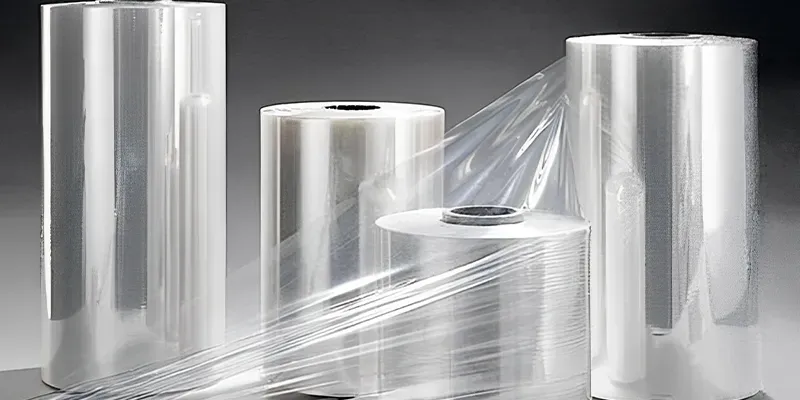
With its excellent performance characteristics, cast film is widely used across numerous industries.
Food Packaging: CPP film is ideal for dry snacks like cookies, offering excellent transparency and moisture protection.
Multilayer composite cast films are used for modified atmosphere packaging of meat and cheese, combining oxygen barrier and freshness retention.
High-temperature-resistant cast films are used for microwaveable packaging and retort pouches, meeting sterilization requirements.
Food-grade cast films must meet strict hygiene standards to ensure no contamination.
Medical and Healthcare:Medical-grade cast films are used for pharmaceutical blister packs and sterilization pouches, requiring high purity and biocompatibility.
Breathable cast films are used in surgical gowns and dressings, balancing protection and comfort.
In personal care products, cast films serve as back sheets and packaging for sanitary napkins and diapers, requiring softness and liquid barrier properties.
These films undergo stringent sterilization and performance testing to ensure safety.
Electronics Protection:Anti-static cast films are widely used in packaging and transportation of IC boards, LCD screens, and other components to prevent electrostatic damage.
Ultra-clean cast films are used as temporary protection in semiconductor manufacturing, requiring extremely low particle contamination and chemical release.
Other specialty films like EMI shielding and thermal conductive films serve specific electronic protection and heat dissipation needs.
As electronics evolve toward thinner and higher performance devices, the demand for high-performance protective cast films is driving continuous material innovation.
As a leading professional manufacturer of cast film line, we aim to provide excellent film quality, precise thickness control and consistent production stability. With the continuous development of material science and the growing needs of the food packaging, medical and electronics industries, cast film technology has become a cutting-edge technology in the field of high-performance film manufacturing. Whether you are developing CPP, CPE, PA or multi-layer barrier films, Jwell's advanced cast film line ensures a seamless blend of innovation and efficiency. With decades of extrusion expertise and intelligent automation systems, Jwell's cast film lineis an ideal solution to enhance your product competitiveness and meet the diverse needs of modern packaging applications. You can learn more about our equipment.